Maybe you’ve heard about how account-based marketing (ABM) flips the traditional B2B sales funnel on its head. While this may be true, it’s also an oversimplification that can leave you with more questions than answers.
What does ABM look like in practice? How is it different from inbound marketing? Is ABM just another phrase for outbound sales? And (perhaps most importantly) is ABM the right approach for my business?
Whether you’re curious about the role of sales in account-based marketing or wondering how your sales team can use ABM to target best-fit customers, this guide to ABM for sales pros has got you covered.
Keep reading to find out everything you need to know about account-based marketing as a sales professional—including how it can impact your sales team and redefine your sales cycle.
What is Account-Based Marketing?
Account-based marketing (ABM) is a collaborative approach to outbound sales and marketing that targets specific high-value client accounts.
The ABM process involves identifying high-value prospective accounts, creating personalized buying experiences tailored to decision-makers, and building client relationships that optimize customer lifetime value and ROI.
A well-rounded ABM strategy often involves reviewing your existing customer list to identify the most lucrative opportunities for upselling and cross-selling to key accounts.
How is Account-Based Marketing Different from Inbound Sales and Marketing?
Here’s a quick summary of what it means for ABM to “flip” the funnel:
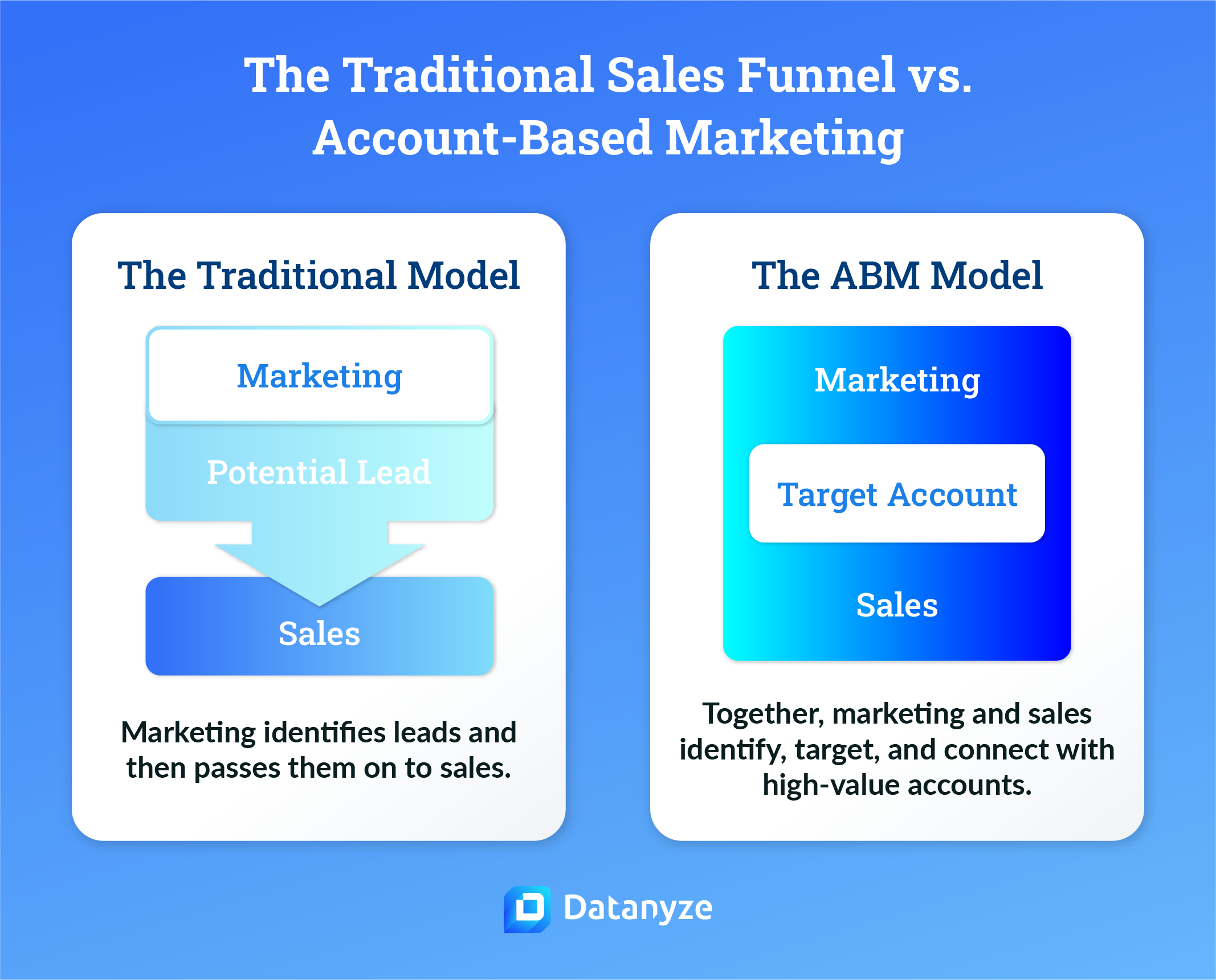
Instead of starting with a general offering and using marketing to attract whatever leads might be interested, the first step is to identify high-value target accounts. From there, both teams use their expertise to create personalized outreach for the decision-maker, develop custom messaging and offers, and invest heavily in scoring the account.
To fully wrap our heads around ABM and how it relates to sales, let’s use the metaphor of marketing and lead generation as fishing.
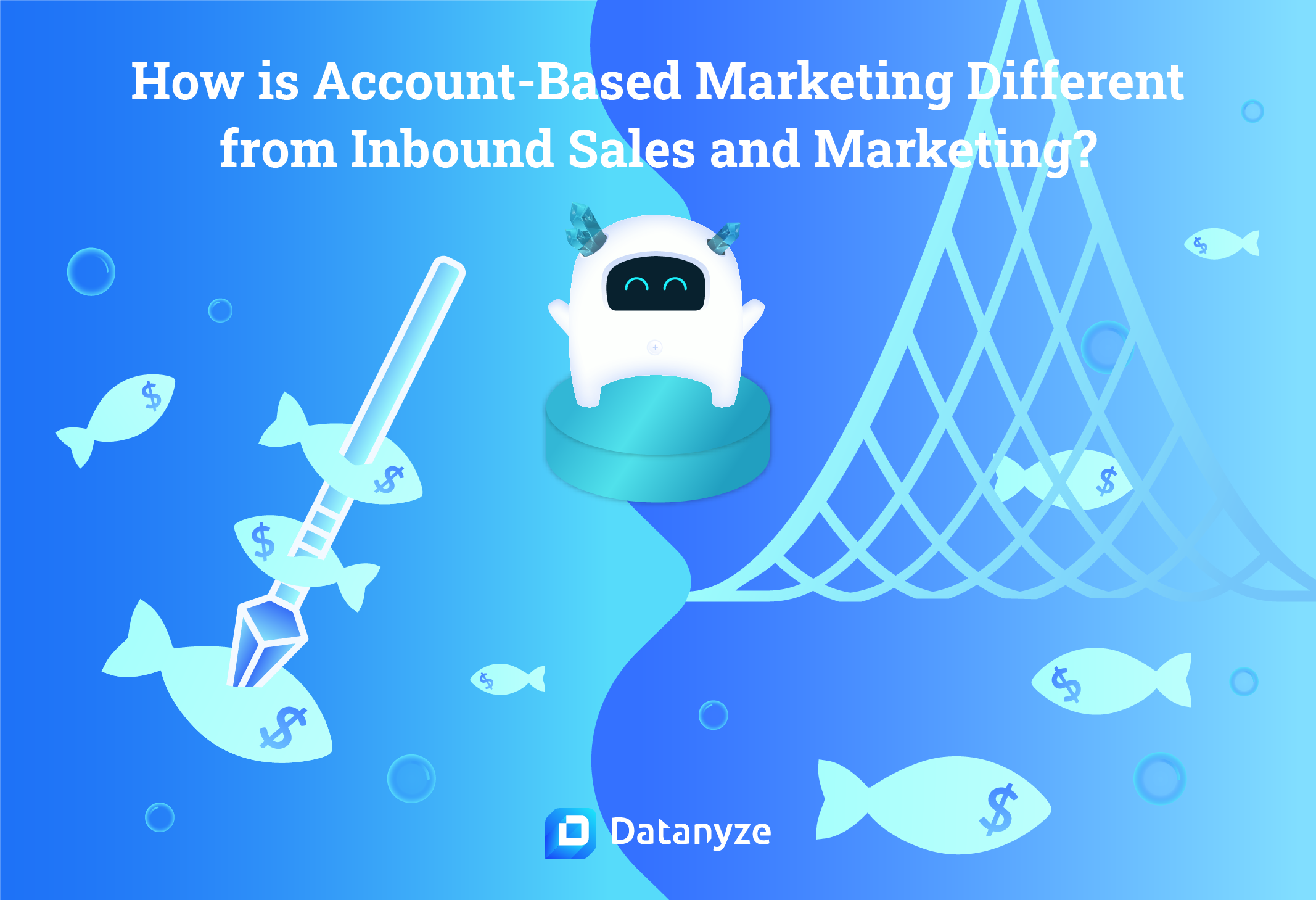
There’s a popular concept that account-based marketing is like fishing with a spear (i.e., selective, specialized, and highly targeted), while traditional B2B marketing is like fishing with a net (i.e., broad, generalized, and designed to appeal to a wider audience).
A traditional inbound marketing strategy is like casting a wide net to catch as many potential leads as possible. Anything and everything that gets caught in the net is passed on to a sales rep. From there, it’s up to the sales team to use their powers of research and qualification to pick out the most viable leads—and release the rest back into the lake, so to speak.
Now, this is an excellent way to drum up a high volume of leads, but it’s largely a numbers game. Without a more intentional marketing approach, there’s no guarantee of capturing qualified leads.
Account-based marketing, on the other hand, is akin to fishing with a spear. In ABM, marketing and sales are strategically positioned to aim, strike, and capture a specific target account. While marketing serves relevant messaging via the target’s preferred channels, sales teams conduct personalized outreach and build a connection.
This method limits your focus to one catch at a time, but the odds of catching a big fish are much higher.
What Are the Benefits of ABM?
Now that we’ve discussed what ABM is, let’s explore why you should care. Account-based marketing has marketing right in the name, but it’s very much a sales strategy—and its impact on your sales potential is huge.
How exactly do sales teams and organizations benefit from account-based marketing? Let’s take a look at the biggest benefits of ABM.
Shorter Sales Cycle
Account-based marketing speeds up your sales cycle by removing uncertainty and creating a shorter sales cycle with fewer steps.
Greater Sales Velocity
Focusing your ABM efforts on a few high-value accounts enables you to close deals faster with fewer speed bumps along the way.
Sales Team & Marketing Alignment
Instead of operating in silos, ABM unifies sales and marketing around a shared strategic goal. Throughout the process, sales and marketing teams work together to identify, engage, convert, and nurture the right accounts.
Smarter Use of Resources
By working in tandem to target high-level decision-makers, sales and marketing can optimize productivity and avoid duplicate efforts. Instead of wasting time on poor-fit leads or dead ends, both marketing and sales pros are focused on a small number of key accounts with the greatest potential.
Higher Win Rate
ABM priorities lead quality over quantity—which is great news for your conversion rate. Rather than trying to generate as many potential leads as possible, ABM allows your sales reps to focus solely on high-value accounts that are most likely to convert.
Higher-Quality Accounts
ABM enables businesses to better target, connect with, and land high-value accounts. That’s because ABM typically focuses on building relationships with a few high-value accounts that represent substantial revenue, rather than attempting to connect with every possible lead under the sun.
Stronger Client Relationships
By combining the strengths of both sales and marketing tactics, ABM delivers personalized customer experiences that foster trust and loyalty in your clients. This enables your business to create stronger relationships with key accounts and prospects.
Optimized Revenue & CLV
Stronger client relationships—especially with high-value accounts—often translate into more profitable relationships. Through ABM, there are more opportunities to increase customer lifetime value (CLV) through custom solutions, upselling, and cross-selling.
The ABM Process: How to Set Your Team Up for Account-Based Marketing Success
OK, now that you know what account-based marketing is and how it can benefit your business, let’s talk a bit about how to put it into practice.
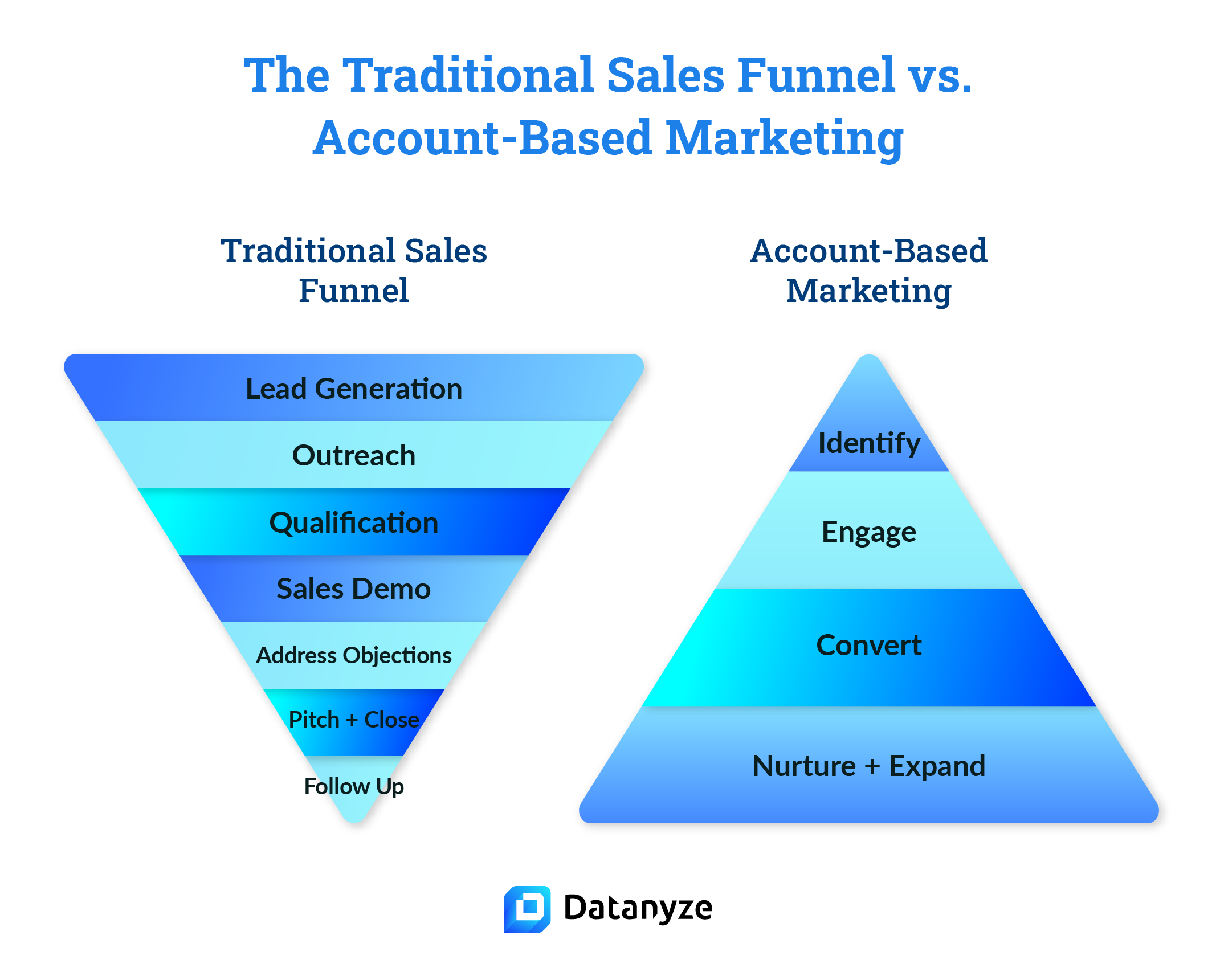
One of the first things to do when launching an ABM initiative is to rethink your current sales process. While the traditional sales cycle involves, at minimum, 5-7 different steps, account-based marketing streamlines the sales process into 3-4 stages.
Instead of moving through the typical sales cycle (i.e., lead generation, outreach, qualifying, scheduling a demo, addressing objections, pitching, closing, and following up), teams that implement ABM identify target accounts first. Then they engage with stakeholders, craft custom pitches and/or solutions to seal the deal, and continue to nurture accounts once they’ve converted to customers.
Let’s walk through each of the steps involved in running a successful ABM program.
Step 1: Define & Identify Target Accounts
ABM begins with selecting a target account (a high-value B2B lead) that you want to land as a client and then building an engagement strategy to make it happen—instead of the other way around.
So, start by identifying best-fit accounts and choosing which one you want to focus on. Bring together sales and marketing to identify the best-fit leads on your radar, source brand new leads that fit your ideal customer profile (ICP), and review your client list for untapped potential.
Tip for greater sales and marketing alignment: To set your sales and marketing teams both up for success in ABM, it’s important to foster a collaborative relationship between these two departments. Unify your marketing and sales teams around a common goal, clearly define expectations and roles for different team members, and clarify how the moving parts all work together.
How to define your ICP: If you don’t yet have an ideal customer profile, creating one is a great place to start building your ABM strategy. Your ICP criteria should include firmographic characteristics like business size, industry, annual sales and revenue, location, and current tech stack. You may also choose to weigh factors like demonstrated interest level (i.e., positioning in the buyer funnel and awareness level), engagement with your brand, and similarities with your current client base.
Step 2: Engage with Decision-Makers
Once you know what business you want to target, you need to get in touch with key decision-makers. ABM typically involves a multi-pronged engagement strategy.
Use your research of the company and the individual decision-maker to ensure your outreach and marketing channels match the target audience’s communication preferences. Depending on your target and their online habits, you might choose to invest in a mix of content marketing, social media marketing, and email.
LinkedIn, in particular, plays an important role in account-based marketing and outbound sales. The professional social media platform allows you to easily locate key stakeholders in positions of power. With a prospecting tool like Datanyze, you can uncover contact information even more quickly and without switching between multiple apps.
Step 3: Convert with a Personalized Pitch
Unlike the traditional sales funnel—which starts with generating a wide pool of leads and slowly moves through the process of contacting and vetting prospects through a series of follow-ups and qualifying conversations—ABM starts with deliberately choosing your next sales targets.
So, by the time you get to the pitching and closing stage in the ABM process, you should already have a good sense of whether your prospect is ready to make a purchase. After all, you’ve already qualified and chosen leads who are most likely to convert—and strategically chosen how to best communicate your value to key stakeholders.
And by now you already know that messaging alone isn’t everything—and that visual form plays a large role in swaying a buyer. Tools like proposal software or business presentation creators will make all the difference in nudging decision makers into your direction.
Since you’ve taken the time to tailor your messaging and proposals to exactly fit your individual target’s needs, this step should go rather smoothly. Closing the deal is just a formal agreement to continue an already-productive conversation between your team and the target account.
Step 4: Nurture and Expand
Once you’ve landed a new account, it’s critical to maintain a positive relationship. Assign a point person to each of your largest accounts and have them check in on a regular basis. Keep up to date on any internal changes that might impact their relationship with your company or how you can best serve them.
Your ABM initiatives should also involve looking at your existing client list for potential upsells and cross-sells. If you have clients who might be looking for a more full-service solution or to upgrade their package, prevent churn by continuing to nurture that relationship over the long term. Keep detailed notes in your CRM and maintain open lines of communication.
Factors to consider when looking for opportunities to upsell or cross-sell: What’s the team’s adoption rate of your product? Are there new stakeholders involved in renewal or purchase decisions? Has the business experienced changes in funding or growth speed? Have they recently pivoted, increased their team size, or expanded into new territories?
Better Together: Supplement Your Account-Based Marketing with Outbound Sales
Unlike traditional digital marketing campaigns, the ABM model involves marketing directly to one specific sales target at a time. This requires identifying leads that represent a large amount of revenue potential and then zeroing in on the decision-maker.
To keep your sales funnel full of leads, we recommend supplementing your ABM approach with outbound sales practices.
LinkedIn is one of the best places to source B2B leads and connections. The professional network enables sales and marketing teams to identify decision-makers at their target accounts. And Datanyze helps to make ABM and sales prospecting easy by providing additional information about prospects in just a couple of clicks.
With the Datanyze Chrome extension, you can easily find and connect with high-value B2B prospects. Target your search on LinkedIn for prospects who fit your ideal customer profile, use Datanyze to locate their contact information, and then send a personalized email in line with your ABM campaign.
Get access to the actionable contact data you need to build connections, including direct dial numbers, mobile phone numbers, and up-to-date email addresses—all without leaving your browser or switching between apps.
So, what are you waiting for? Start using Datanyze today and streamline marketing and sales activities.
