There are many theories in marketing. Some influencers in this space will tell you that inbound lead generation should be the focus of your marketing efforts, while others swear by the power of outbound lead gen.
On paper, these two different approaches seem to be in competition. And of course, they deliver very different leads to your sales team.
But maybe you don’t need to choose between them.
In this post, we’re going to explain why inbound leads and outbound leads have a place in your sales strategy.
Choosing Your Lead Generation Strategy
The purpose of any marketing campaign is to generate leads. However, leads come in many different forms. The best choice of marketing strategy will depend on the kind of leads you want to see arriving in your sales pipeline.
Inbound lead generation aims to attract potential customers who are already searching for a solution, or are at least open to the idea of making an investment. This approach generally relies on content marketing and pay-per-click advertising to reach prospects.
In contrast, outbound lead generation is about reaching out to prospects who may or may not be ready to buy. This might take the form of social media marketing, search engine ads, and display advertising, along with direct outreach by your sales team.
By crafting marketing campaigns and optimizing your sales process for both types of lead, you will be able to access the widest possible target audience. In turn, this should lead to a sales funnel filled with high-quality leads.
Comparing Inbound Leads and Outbound Leads
Another reason to combine strategies is that inbound and outbound leads bring different benefits for your business. They have differing costs, too.
By generating leads using both methods, you can overcome the weaknesses and gain from the strong points of each strategy. To explore this point fully, let’s compare the key benefits of each type of lead:
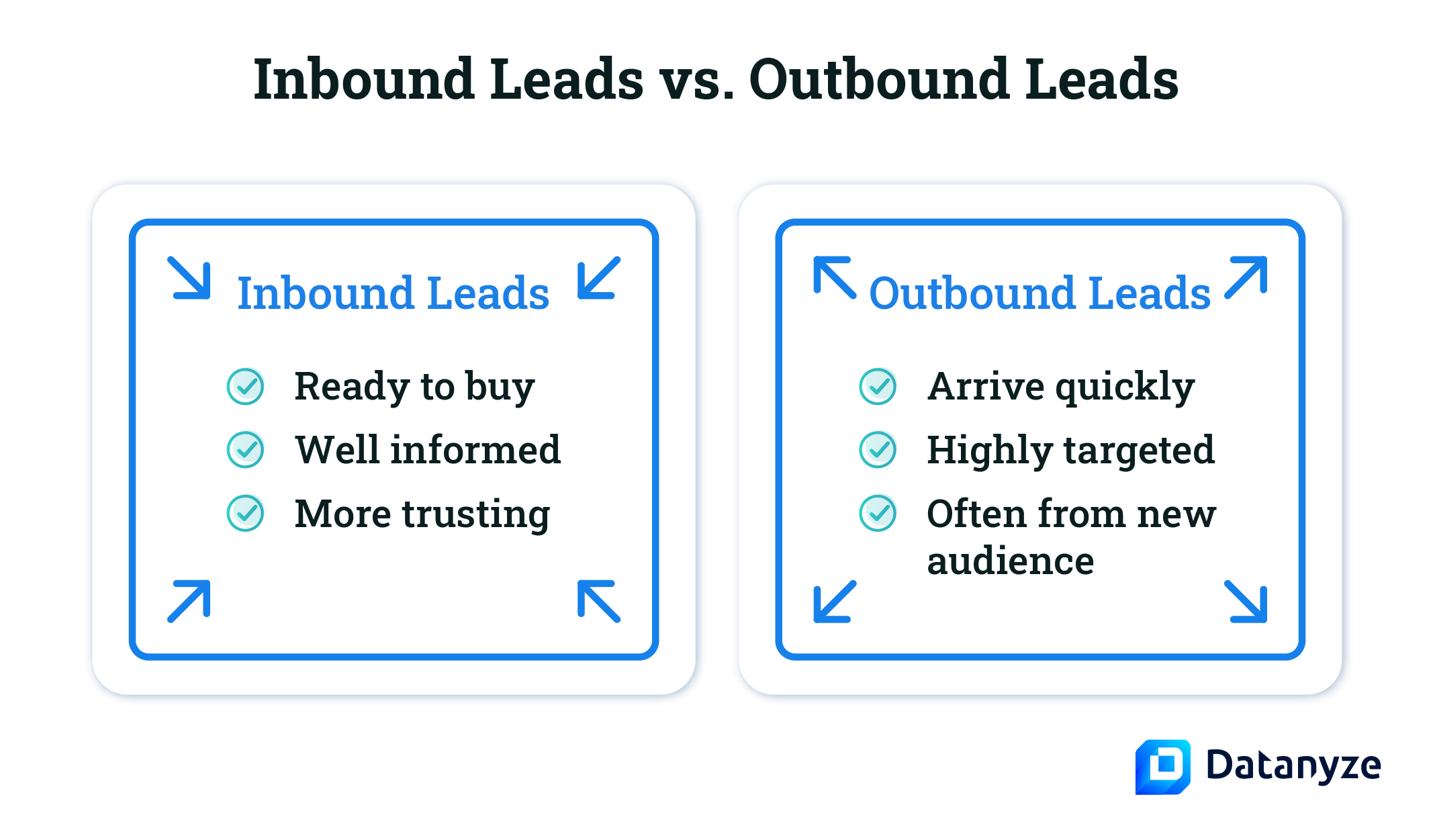
Outbound Lead Generation Offers Faster Returns
If you need to make sales quickly, adopting some form of outbound lead generation is pretty much essential.
This is because outbound techniques involve actively reaching out to potential customers, rather than waiting for them to find your content. There’s a reason why many people call it interruptive marketing.
On the marketing side, investing in ads allows you to reach more prospects without first building an audience. Meanwhile, your sales team can use outbound tactics like cold emailing and cold calling to target specific individuals.
In total, these measures should help you drum up some sales quite rapidly. This can be vital for new startups, but also for more established businesses that are struggling.
Outbound Marketing Can Be Precisely Targeted
Whenever you publish a piece of content, the ambition should always be to target your ideal customers. However, even the most finely-tuned blog post or podcast won’t be able to match the level of precision offered by advertising or outreach.
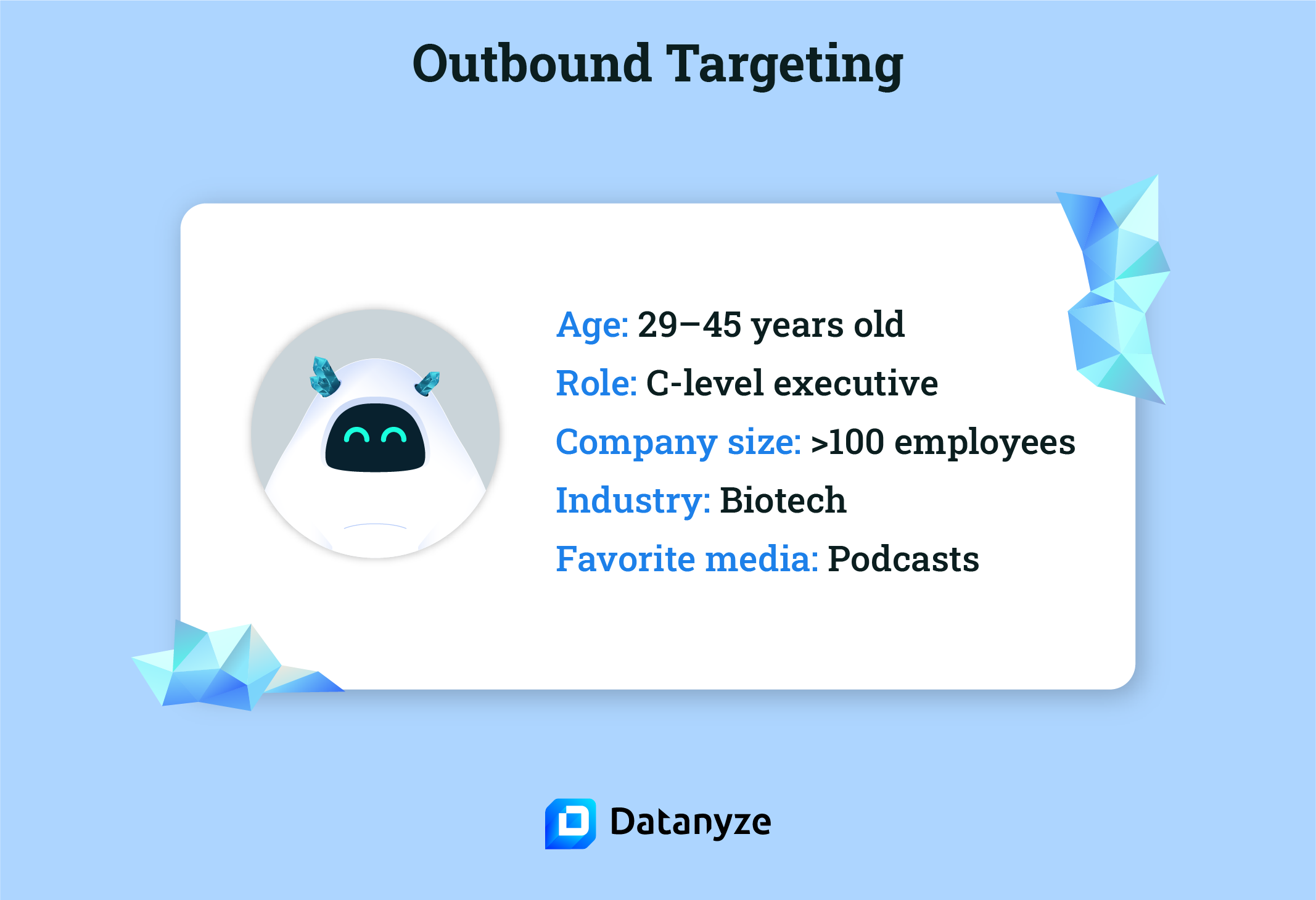
While inbound marketing largely relies on Google to direct prospects towards your content, outbound techniques allow you to chase prospects that hold a certain job title, and who work at companies of a specific size. You can even target an individual company, if you want.
Inbound Leads Are Usually Ready for the Next Steps
Of course, targeting can only take you so far. Even if someone matches all the criteria for your ideal customer, there is no guarantee that they will be ready to make a purchase when they encounter an ad or receive your cold email.
This is where an inbound strategy has the advantage. If you publish relevant content and utilize SEO (search engine optimization), people who are looking for solutions should find your site. By definition, they should be primed for a purchase — or at least be ready to consider their options.
Inbound Leads Usually Have Better Awareness
Prospects who are looking for solutions are people who know their own pain points. They may even have some knowledge of what their ideal solution looks like, and know some of the companies within that space.
In other words, inbound leads are usually well informed.
The same individuals are often drawn to your brand through infographics, webinars, white papers, and blog posts. And these forms of content end up adding to their education.
How does this benefit your sales team? Well, it means that reps can bypass a lot of explaining and simply focus on selling your product. As a consequence, you can expect an excellent conversion rate.
Inbound Marketing Helps Build Trust and Credibility
Of course, even the most educated potential customers are not true experts. They are generally still open to advice from someone who seems more knowledgeable.
With a well-executed inbound marketing strategy, it’s possible to position your brand in this role of trusted advisor. The key is to deliver relevant content in a timely manner — whether through email marketing, social media, or posting guides on your blog.
The benefit of taking this role is that customers are more likely to engage with your pitch, and place greater value on any advice given by your salespeople.
Why Focusing on One Strategy Doesn’t Work
Even if you put equal resources into both inbound and outbound lead generation, it’s highly likely that one of these strategies will outperform the other over a given timeframe.
But that doesn’t mean you should put all your eggs in one basket.
Why? Because each side of the equation can improve the other.
Say you see more initial success through your outbound efforts, and leads are flooding your pipeline. Great news! But chances are, many of these leads won’t actually be ready to make a purchase. They might want to learn more about all the problems at hand, or the possible solutions.
This is where inbound marketing can make a difference. By directing these leads towards valuable content, you can educate them and earn their trust. This should help to move them down the sales funnel, until the point they are ready to place an order.
The same principle of teamwork applies in the other direction.
While inbound lead generation can be very productive, it often takes a while to see the fruits of your labor. Your email list won’t be huge on day one, and your posts definitely won’t appear on the first page of Google.
However, you can fill in the gap with outbound activities. Outbound sales techniques can generate sales on day one, and ads will guide your target audience towards your content.
How to Create a Balanced Lead Generation Strategy
This kind of synergy is powerful, but complex. To get both your inbound and outbound strategies working together seamlessly, you need to strike a good balance between the two approaches. Here are some key principles to help you get started:
1) Support Outbound Efforts With Inbound Marketing
For any company that wants to maximize growth, outbound marketing is a necessity. However, no business has enough time to phone every possible lead, nor the resources to pay for endless advertising.
For this reason, it’s important to support your outbound efforts with strong inbound marketing.
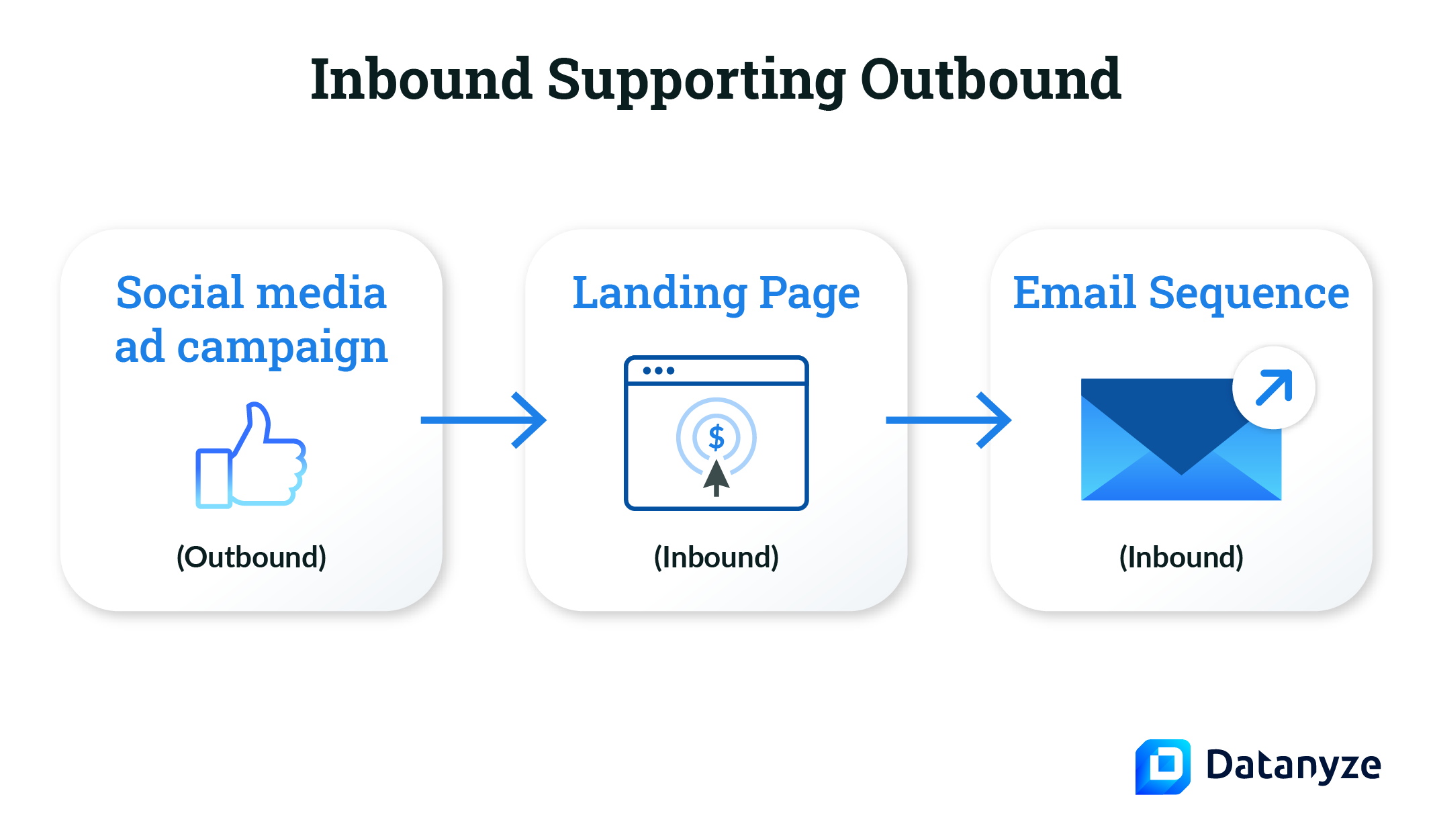
For instance, you might run a social media ad campaign (outbound) aimed at building your email list. You can then nurture the leads who sign up through an automated sequence (inbound).
The messages you send can even point towards other forms of content, such as blogs and downloadable white papers.
2) Create Content for the Full Funnel
A lot of the time, outbound campaigns are set up to promote inbound content — like when you pay for promoted posts on Facebook.
In most cases, the content being promoted is aimed at prospects at the top of the funnel. But for this tactic to be truly effective, you need to have content that stretches deeper.
Say someone sees an ad for one of your top articles, and clicks through to read it. With a compelling call to action, you might convince some readers to sign up for a lead magnet or even take a free trial. However, plenty of visitors will want to learn more before committing to any action.
If you can direct these individuals towards middle-of-the-funnel content — such as ebooks, and articles comparing popular solutions — you have a much better chance of converting them into sales-ready leads.
3) Balance Paid, Owned, and Organic Media
Here’s a tough question: how do you know if you have the inbound-outbound balance right?
It’s difficult to quantify. But as a general rule, you should be aiming to conquer three types of media: paid, owned, and organic.
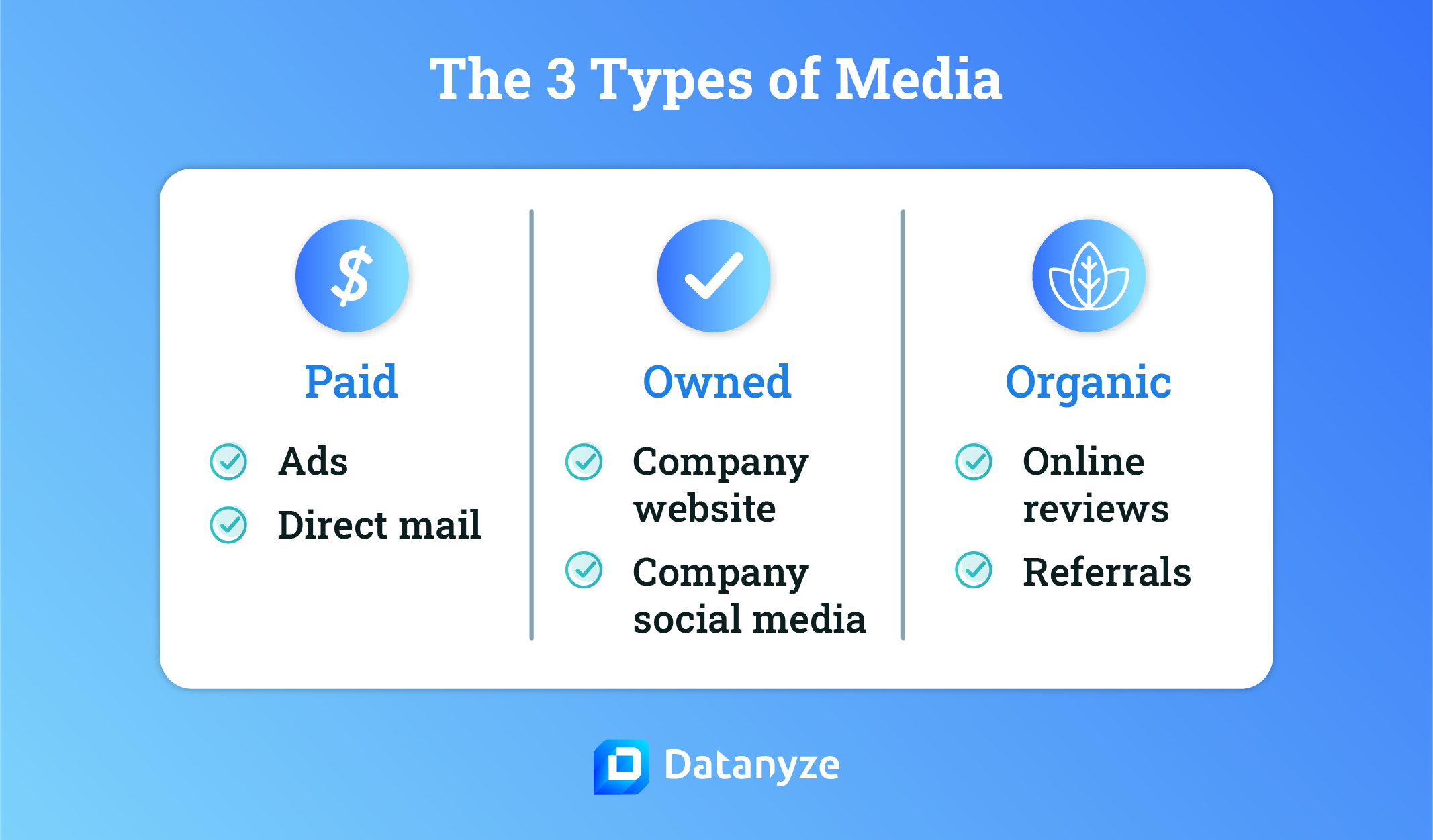
Outbound campaigns based around paid media are great for drawing attention to your brand. Once people start to engage, they will come across your owned media — such as your company website, brochure, app, or social media page. This is an exclusively inbound area.
If enough people click on your ads and like your page, you may start earning organic media. This is where third parties make favorable posts about your business on social media, or make referrals.
In general, you will only receive organic coverage if both your inbound and outbound marketing is working well.
Convert More Leads With a Better Sales Process
By following the principles outlined above, you have an excellent chance of building a consistent stream of inbound and outbound leads.
Of course, that is only the beginning of the sales process. When leads arrive in your pipeline, you need to nurture them if you want to end up closing a deal.
To give your salespeople the best chance of converting every hot lead, it’s a good idea to review your sales workflow. The best sales tools can reduce admin, and help reps to access important data faster.
Datanyze is a powerful example. In seconds, our Chrome extension can reveal accurate contact information and company information for any LinkedIn user or professional with a company page.
Sounds useful? Sign up today to get your free 90-day trial!
